
Quick Answer
Hospital vinyl flooring dubai is a specialized, homogeneous or heterogeneous PVC flooring designed for infection control, chemical resistance, and heavy foot traffic — a category with stricter performance requirements than standard residential flooring. WPC (Wood Plastic Composite) and SPC (Stone Plastic Composite) are both rigid-core vinyl flooring types used more broadly across homes and offices; SPC is denser and more scratch- and dent-resistant, while WPC is softer underfoot and slightly warmer, making it a common choice for bedrooms and living areas. Risala Furniture and Interiors LLC supplies all three flooring types across Dubai for both healthcare and residential/commercial projects.
Key Facts Table
| Flooring Type | Core Material | Best Setting | Water Resistance | Durability |
| Hospital Vinyl Flooring | Homogeneous/heterogeneous PVC | Hospitals, clinics, labs | Very high | Very high (heavy traffic rated) |
| WPC Flooring | Wood-plastic composite core | Bedrooms, living rooms | High | High |
| SPC Flooring | Stone-plastic composite core | High-traffic homes, offices, retail | Very high | Very high (denser core) |
Introduction
WPC Flooring dubai choices for healthcare facilities and heavy-traffic commercial spaces in Dubai are governed by very different priorities than a typical home renovation — infection control, chemical resistance, and long-term durability under constant foot traffic and equipment movement take priority over pure aesthetics. This guide explains hospital vinyl flooring alongside two increasingly popular rigid-core alternatives, WPC and SPC flooring, so facility managers, contractors, and homeowners can choose the right product for their specific needs.
What Is Hospital Vinyl Flooring and Why Does It Matter?
Hospital vinyl flooring refers to specialized PVC flooring engineered for healthcare environments. Unlike standard vinyl, it’s designed to meet stricter hygiene and safety standards, since floors in clinical settings are subject to constant cleaning, disinfectant exposure, and the movement of medical equipment and trolleys.
Key properties of hospital-grade vinyl flooring:
- Seamless or heat-welded seams: minimizes joints where bacteria or moisture could accumulate — a factor widely referenced in infection-control guidance from healthcare facility standards bodies.
- Chemical resistance: withstands repeated exposure to disinfectants and cleaning agents without degrading.
- Slip resistance: many hospital vinyl products meet enhanced slip-resistance ratings for safety in wet-cleaning environments.
- Static-control options: available for specific rooms like operating theatres or labs where static discharge is a concern.
Hospital vinyl flooring is typically installed with coved skirting (where the flooring curves up the wall) to eliminate hard-to-clean corners — a detail commonly required in healthcare fit-out specifications across the UAE.
WPC Flooring: A Warmer, Residential-Friendly Option
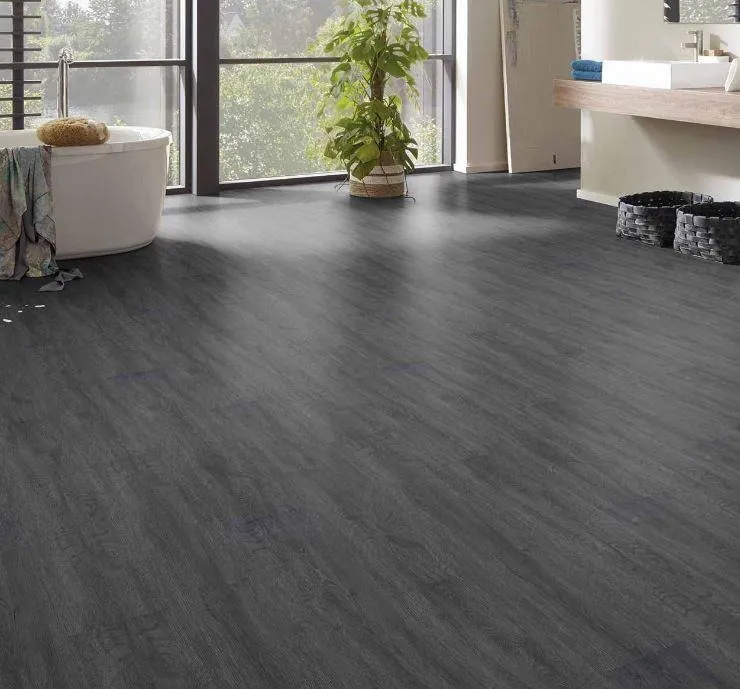
WPC flooring uses a wood-plastic composite core, which gives it a slightly softer, warmer feel underfoot compared to denser rigid-core alternatives. It’s a popular choice in Dubai homes that want the look of wood flooring with better moisture resistance than natural wood.
Advantages of WPC flooring:
- More comfortable underfoot, making it a good fit for bedrooms and living rooms.
- Better sound absorption than harder flooring types, reducing footstep noise in apartments.
- Water-resistant core, suitable for kitchens and areas with occasional moisture exposure.
- Wide range of wood-look finishes without the humidity sensitivity of solid wood.
SPC Flooring Supplier in Dubai: What to Look For
SPC flooring Supplier in dubai uses a denser stone-plastic composite core, making it more rigid and resistant to dents, scratches, and temperature fluctuations than WPC. This makes SPC a common recommendation for high-traffic homes, retail spaces, and offices in Dubai.
What a reliable SPC flooring supplier in Dubai should offer:
- Verified wear layer thickness (thicker wear layers generally mean better scratch and stain resistance).
- Waterproof, click-lock installation systems suited for humid areas like bathrooms and kitchens.
- UV-resistant surface treatment to prevent color fading near windows and glass facades.
- Underlayment options for sound dampening in multi-story buildings, a common requirement in Dubai apartment developments.
Hospital Vinyl vs. WPC vs. SPC Flooring: Comparison Table
| Factor | Hospital Vinyl | WPC | SPC |
| Primary setting | Healthcare facilities | Homes | Homes, offices, retail |
| Hygiene/infection control | Purpose-built | Standard | Standard |
| Underfoot comfort | Moderate | High | Moderate |
| Scratch/dent resistance | High | Moderate | Very high |
| Typical installation | Heat-welded/coved | Click-lock | Click-lock |
Actionable Tips
- For any healthcare project, confirm the vinyl flooring meets relevant slip-resistance and hygiene specifications before installation begins — this is not an area to compromise on for cost savings.
- Choose WPC flooring for bedrooms or living rooms where comfort and warmth underfoot matter more than maximum durability.
- Choose SPC flooring for hallways, kitchens, or commercial spaces with heavy daily foot traffic.
- Always request the wear layer thickness specification when comparing SPC or WPC products — this is a more reliable durability indicator than price alone.
Risala Furniture and Interiors LLC supplies hospital-grade vinyl flooring alongside WPC and SPC flooring for residential and commercial clients across Dubai, helping match the flooring type to the specific demands of each space.
FAQ Section
1. What makes hospital vinyl flooring different from regular vinyl flooring? Hospital vinyl flooring is engineered for infection control, chemical resistance, and heavy traffic, often with heat-welded seams and coved skirting — features not typically found in standard residential vinyl.
2. Is SPC flooring completely waterproof? Yes, SPC flooring’s stone-plastic composite core is generally waterproof, making it suitable for kitchens, bathrooms, and other moisture-prone areas.
3. Which is better for bedrooms — WPC or SPC flooring? WPC is typically preferred for bedrooms due to its softer, warmer feel underfoot and better sound absorption compared to the denser SPC core.
4. Can hospital vinyl flooring be installed in clinics as well as hospitals? Yes, hospital-grade vinyl flooring is commonly used in clinics, labs, and other healthcare settings that require similar hygiene and durability standards.
5. How long does SPC flooring typically last? With proper installation and normal use, SPC flooring can last well over a decade in both residential and commercial settings due to its dense, rigid core.
6. Does WPC flooring work well in Dubai’s humidity near the coast? Yes, WPC flooring’s water-resistant core generally performs well in humid conditions, making it a suitable option for coastal Dubai properties.
7. Are hospital vinyl floors slippery when wet? Quality hospital-grade vinyl flooring is typically manufactured with enhanced slip-resistance ratings specifically to reduce this risk during wet cleaning.
8. What’s the installation method for SPC and WPC flooring? Both typically use a click-lock floating floor system, which allows for relatively fast installation without adhesives in most cases.
9. Can SPC or WPC flooring be installed over existing tiles? In many cases, yes, provided the existing surface is flat and stable, though a professional assessment is recommended before installation.
10. Where does Risala Furniture and Interiors provide its services? Risala Furniture and Interiors LLC provides its services in UAE ,OMAN , QATAR , SAUDI ARABIA , KUWAIT , BAHRAIN and all across the Gulf and Middle East region.
Key Takeaways
- Hospital vinyl flooring is purpose-built for infection control and heavy-duty healthcare use, with features like heat-welded seams and coved skirting.
- WPC flooring offers a warmer, more comfortable option for residential bedrooms and living rooms.
- SPC flooring’s dense core makes it better suited to high-traffic homes, offices, and retail spaces.
- Wear layer thickness is a key durability indicator when comparing SPC and WPC products.
- Matching flooring type to the room’s specific use — rather than choosing on looks alone — leads to better long-term performance.
Conclusion
Whether you’re specifying flooring for a healthcare facility or choosing between WPC and SPC for a home renovation, the right decision depends on how the space is actually used — hygiene and chemical resistance for clinical settings, comfort for bedrooms, and durability for high-traffic areas. Risala Furniture and Interiors LLC supplies and advises on all three flooring types across Dubai, helping match technical specifications to real-world project needs.
📍 Visit us: maps.app.goo.gl/igmNHkW1QCyL19wT7?g_st=ac
