
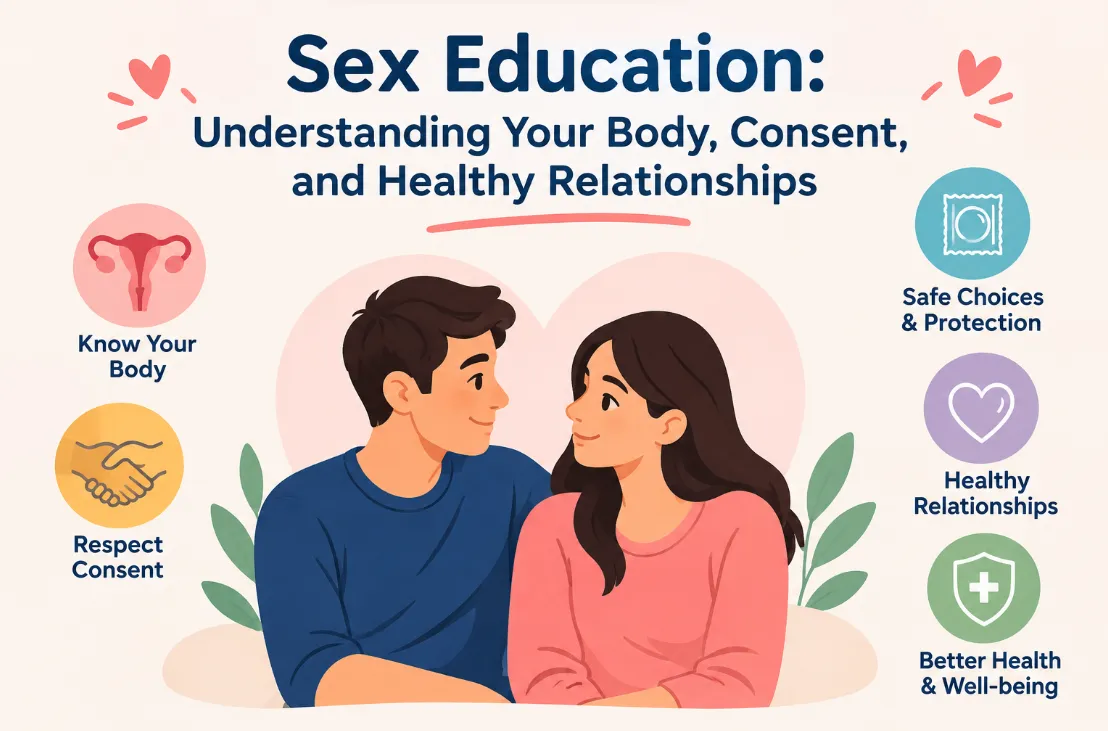
Sex education is an important part of understanding our bodies, emotions, relationships, and personal boundaries. Despite its importance, many people grow up without access to reliable information about sexual health. This can lead to confusion, misconceptions, and decisions based on misinformation from friends, social media, or the internet.
Sex education is not simply about sexual activity. It also includes learning about consent, reproductive health, emotional well-being, contraception, sexually transmitted infections (STIs), and respectful relationships.
Understanding sexual health, relationships, and personal boundaries is essential for making informed decisions. Explore educational resources covering consent, reproductive health, contraception, STI prevention, emotional well-being, and online privacy. Stay informed with reliable guidance that promotes healthy relationships, responsible choices, and a better understanding of intimacy, while discovering trending desi videos and related online content responsibly.
At Desi Vedesi, we believe that access to responsible educational information can help adults make informed decisions, communicate more openly, and approach relationships with greater awareness.
1. What Is Sex Education?
Sex education is the process of learning about human sexuality, reproductive systems, physical development, emotional relationships, and sexual health.
Comprehensive sex education covers several important subjects:
- Anatomy and reproductive health: Understanding the human body and how reproduction works.
- Consent and boundaries: Learning that every person has the right to make decisions about their own body.
- Contraception: Understanding available methods to prevent unintended pregnancy.
- STI awareness: Learning how sexually transmitted infections spread and how to reduce risks.
- Emotional well-being: Recognizing the importance of trust, communication, and mutual respect.
- Digital safety: Understanding privacy, intimate images, and responsible online behaviour.
Accurate information helps people distinguish medical facts from common myths.
2. Why Is Sex Education Important?
A lack of reliable information can leave people vulnerable to misinformation and unhealthy relationship expectations.
Sex education can help individuals:
- Make informed decisions about their sexual health.
- Recognize the importance of mutual consent.
- Understand pregnancy prevention and reproductive choices.
- Identify potential STI risks and seek appropriate testing.
- Communicate their boundaries and expectations.
- Recognize unhealthy, coercive, or abusive behaviour.
Sex education should be age-appropriate, factual, inclusive, and free from unnecessary shame or stigma.
3. Understanding Consent
Consent is one of the most important principles of any intimate relationship.
Consent means freely agreeing to a particular activity. It must be voluntary, informed, and specific. Every person has the right to change their mind at any time.
Remember these essential principles:
Consent must be freely given. Pressure, threats, manipulation, or fear undermine genuine consent.
Silence does not automatically mean consent. It is important to communicate clearly and check that the other person is comfortable.
Consent can be withdrawn. Agreeing to something previously does not mean agreeing to it again.
Being in a relationship does not remove the need for consent. Partners have equal rights to personal boundaries.
Respectful communication creates a safer environment in which both people feel heard and valued.
4. Sexual Health and STI Prevention
Sexual health is an essential part of overall well-being. Sexually transmitted infections can spread through certain forms of sexual contact, and some infections may not cause noticeable symptoms.
Practical steps to reduce risk include:
- Using condoms correctly and consistently to reduce the risk of many STIs and unintended pregnancy.
- Considering appropriate STI testing based on personal circumstances and exposure.
- Seeking medical advice if symptoms or a possible exposure occur.
- Discussing sexual health openly with partners.
- Asking a healthcare professional about HPV and hepatitis B vaccination.
Condoms reduce risk but do not eliminate every STI risk. Some infections can spread through skin-to-skin contact involving areas that condoms do not cover.
Avoid self-diagnosing based on online information. A qualified healthcare professional can recommend appropriate testing, treatment, and prevention options.
5. Understanding Contraception and Pregnancy Prevention
Contraception includes methods used to prevent pregnancy. Different methods have different levels of effectiveness, benefits, and limitations.
Common options include:
- Condoms: Help reduce pregnancy risk and provide protection against many STIs.
- Oral contraceptive pills: Hormonal methods that require appropriate selection and use.
- Intrauterine devices (IUDs): Long-acting contraceptive options fitted by a healthcare professional.
- Implants and injections: Hormonal methods that provide contraception for varying periods.
- Emergency contraception: Options that may help prevent pregnancy after unprotected sex or contraceptive failure; timing matters.
No single method is right for everyone. A healthcare professional can help identify an option based on medical history, preferences, accessibility, and reproductive goals.
6. Healthy Relationships and Emotional Intimacy
A healthy intimate relationship involves more than physical attraction. Trust, honesty, empathy, and communication are equally important.
Healthy relationships generally include:
- Respect for individual boundaries.
- Open conversations about expectations.
- Freedom to say no without fear.
- Emotional support and mutual understanding.
- Respect for personal space and privacy.
- Shared responsibility for sexual health.
Jealousy, pressure, controlling behaviour, and repeated disregard for boundaries should not be mistaken for love or commitment.
Every relationship is different, but respect and safety should remain fundamental.
7. Common Sex Education Myths and Facts
Misinformation about sexuality can create unnecessary anxiety. Here are a few common misconceptions.
Myth: You can always identify an STI by looking at someone.
Fact: Many STIs have no visible symptoms. Testing is an important way to identify infections.
Myth: Consent is unnecessary in a committed relationship.
Fact: Consent is necessary in every relationship, regardless of its duration or status.
Myth: Condoms provide complete protection against every STI.
Fact: Condoms substantially reduce the risk of many infections, but they do not eliminate all risks.
Myth: Talking about sexual health encourages irresponsible behaviour.
Fact: Accurate, age-appropriate education helps people understand risks, boundaries, and informed decision-making.
Myth: Everyone experiences sexual attraction and intimacy in the same way.
Fact: People differ in their feelings, preferences, experiences, and readiness for intimacy. Individual differences should be respected.
8. Digital Privacy and Responsible Online Behaviour
In the digital age, sexual health education also includes understanding online privacy and personal safety.
Before sharing intimate photographs, videos, or messages, consider the risks involved. Once digital content is shared, you may lose control over how it is stored, copied, or distributed.
Follow these basic safety principles:
- Never pressure someone to send intimate images.
- Never share another person’s private content without their explicit permission.
- Use strong passwords and appropriate account security settings.
- Be cautious about suspicious links, impersonation, and blackmail.
- Report non-consensual intimate content through the relevant platform and appropriate authorities.
Consent to create or send an image is not consent to publish or redistribute it. Respecting privacy is a fundamental part of responsible digital behaviour.
9. When Should You Seek Professional Advice?
Online educational resources can provide useful general information, but they cannot replace individualized medical care.
Consider speaking with a qualified healthcare professional if you have concerns about:
- Possible STI exposure or symptoms.
- Contraceptive options or unintended pregnancy.
- Persistent pain or discomfort during sexual activity.
- Sexual functioning or reproductive health.
- Sexual coercion, abuse, or personal safety.
If a possible HIV exposure has occurred, seek urgent medical advice because post-exposure prophylaxis (PEP) must be started within 72 hours and is most effective when started as soon as possible.
Conclusion
Sex education is about knowledge, responsibility, safety, and respect. Understanding consent, contraception, reproductive health, STI prevention, emotional intimacy, and digital privacy can help people make better-informed decisions throughout their lives.
Reliable information should replace myths, and open communication should replace shame. By learning about sexual health and respecting personal boundaries, individuals can work toward healthier relationships and greater well-being.
Desi Vedesi encourages readers to seek reliable information, respect consent, protect personal privacy, and consult qualified healthcare professionals for individual medical concerns.
Disclaimer: This article is intended for general educational purposes only. It is not a substitute for professional medical advice, diagnosis, or treatment.
