
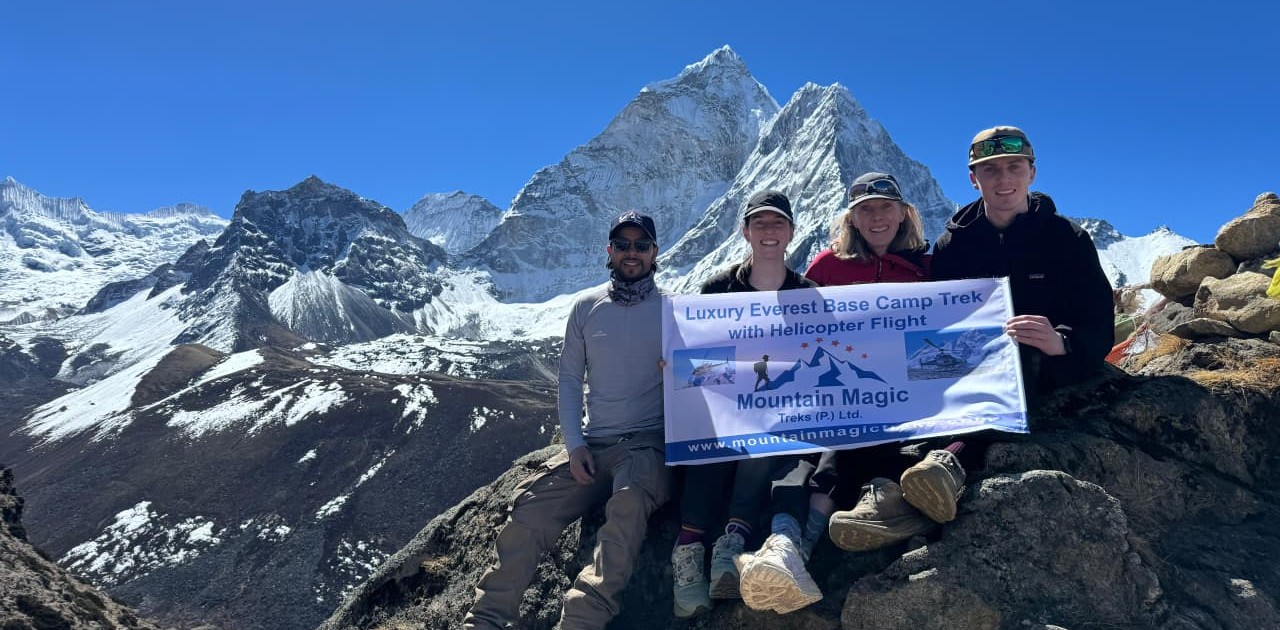
Not everyone can take two or three weeks away from work or daily life. Yet, that does not mean you have to skip the chance to see Mount Everest. If your time in Nepal is limited, choosing the right trekking plan becomes important.
The Everest Base Camp Trek with helicopter return brings together a classic Himalayan walking experience and a faster return from the mountains. You spend your trekking days exploring the Khumbu region, reach Everest Base Camp, and then fly back by helicopter instead of walking the full route again, depending on weather and flight conditions.
For travelers with a tight schedule, this approach can make an Everest adventure much easier to plan.
Why Time Matters on an Everest Trip
A normal round-trip trek requires you to walk toward Base Camp and then return on foot.
The return route is beautiful, but it takes several days.
Avoid Repeating the Same Trail
Once you have reached your main goal, walking back through the same valleys may not be your first choice.
A helicopter return removes much of that extra walking time.
You can spend more of your limited vacation experiencing the high-altitude sections rather than using additional days for the downhill journey.
Make Your First Days Count
Your adventure begins in Kathmandu before you head toward Lukla.
The city gives you time to prepare for the mountains and organize your gear.
From City Streets to Mountain Trails
After reaching Lukla, the atmosphere changes quickly.
The trail takes you through green hills, small settlements, forests, and river valleys.
The early walking days are important because they allow you to settle into the pace of trekking before reaching much higher elevations.
Namche Is a Key Stop
The journey toward Namche Bazaar introduces more climbing.
You cross suspension bridges and follow the Dudh Koshi River before reaching the famous mountain town.
Namche is more than a place to spend the night.
Use the Acclimatization Time
Your body needs time to adjust as you gain altitude.
A planned acclimatization day allows you to explore around Namche without moving much higher.
A short hike can be useful, but the day should not become another hard trekking day.
Rest when your body asks for it.
Continue Toward the Higher Villages
After Namche, the route heads toward Tengboche and then Dingboche.
The scenery gradually changes.
Forests become thinner, valleys open up, and the mountains become more prominent.
Tengboche Adds Culture to the Trek
Tengboche is known for its Buddhist monastery and peaceful mountain setting.
This is a good place to slow down and notice the cultural side of the journey.
The Everest region is home to Sherpa communities, and local traditions are visible throughout the trail.
Dingboche Helps You Prepare for the High Trail
Dingboche is another important acclimatization point.
By now, you may notice that walking uphill takes more effort.
Do Not Fight the Altitude
There is no advantage in trying to maintain your lower-altitude walking speed.
Take smaller steps.
Breathe steadily.
Drink enough water.
Eat regular meals.
If you feel unwell, tell your guide instead of trying to hide it.
The Everest Base Camp Trek with helicopter return still requires proper altitude preparation despite the shorter return.
The Landscape Changes Near Lobuche
Beyond Dingboche, the scenery becomes more rugged.
Trees are limited, and rocky slopes dominate the route.
The cold becomes more noticeable, especially during mornings and evenings.
Keep Your Energy for the Finish
The higher trail is not the place to waste energy.
Use a comfortable pace and take short breaks.
Keep your warm layers and water easily accessible.
A few minutes of preparation can make a long walking day much easier.
Gorakshep Is Your High-Mountain Base
Gorakshep sits close to the final section of the journey.
The environment here feels very different from the lower valleys.
You are surrounded by rocks, glaciers, and enormous Himalayan peaks.
Prepare for the Walk to Base Camp
The route from Gorakshep to Everest Base Camp follows rough terrain near the Khumbu Glacier.
The altitude can make the walk feel harder than the distance suggests.
Stay focused on one section at a time.
Eventually, you reach the place you came to see.
Enjoy the Achievement at Everest Base Camp
Arriving at Base Camp is a moment worth enjoying.
You have spent days walking deeper into the Himalayas.
Look Back Before Moving On
Think about how different the landscape looked when you started from Lukla.
The green hills have been replaced by a high mountain world.
Take photos, enjoy the surroundings, and give yourself time to appreciate what you have achieved.
Add Kala Patthar to Your Plan
Kala Patthar is approximately 5,545 meters high and is known for its impressive views toward Everest.
The climb is demanding because of the altitude.
Morning Offers a Special View
An early climb can be cold, but the changing morning light can make the mountains look spectacular.
Move slowly and listen to your guide.
The view is worth enjoying rather than rushing through.
Return Without Spending Days on Foot
This is where the Everest Base Camp Trek with helicopter return becomes especially useful for travelers with limited time.
After completing the main trekking experience, you can return by helicopter instead of walking the full route back.
Turn Your Return Into Another Adventure
The flight is not simply a faster form of transportation.
It offers a completely different view of the region.
From above, the valleys look wider, the trails look smaller, and the mountains form a huge landscape around you.
After spending days walking through the Himalayas, this aerial view can be an exciting final memory.
Keep Your Schedule Flexible
A short trip does not mean every minute should be booked.
Mountain weather can affect helicopter operations.
Leave Room for Delays
Clouds, wind, visibility, and other conditions can change flight plans.
If you have an international flight after returning to Kathmandu, leave enough time between the two journeys.
A flexible schedule is much safer than trying to fit everything into a tight timetable.
What to Focus on During the Trek
With limited time, you may feel pressure to see everything.
That can take away from the experience.
Choose Quality Over Speed
Instead of worrying about how many photographs you can take, enjoy the places you pass.
Talk with your guide.
Watch the mountains.
Enjoy a warm meal.
Take a few quiet moments in the villages.
The best memories often come from things that were not planned.
Final Thoughts
The Everest Base Camp Trek with helicopter return can be a smart option for travelers who want to experience the Everest region without spending several additional days walking back.
The trekking section still gives you the major parts of the journey: Lukla, Namche Bazaar, Tengboche, Dingboche, Lobuche, Gorakshep, Everest Base Camp, and Kala Patthar.
The helicopter simply changes the ending.
Instead of repeating the trail on foot, you can rise above the mountains and return much faster, subject to suitable flying conditions.
If your vacation time is limited, this combination can help you experience more while spending less time on the return trail. Prepare properly, respect the altitude, and leave room for mountain weather. That is the best way to turn a short Nepal trip into a meaningful Everest adventure.
Frequently Asked Questions
How does the Everest Base Camp Trek with helicopter return save time?
It replaces the several-day walk back from the Everest region with a helicopter journey, subject to weather and operating conditions.
Do I still need to prepare physically?
Yes. The main trekking route remains challenging, with long walking days and high elevation.
How important is acclimatization?
It is essential. Planned stops at places such as Namche and Dingboche allow your body time to adjust.
Is Kala Patthar higher than Everest Base Camp?
Yes. Kala Patthar reaches approximately 5,545 meters and provides excellent views of Everest.
Can I book a tight flight connection after the helicopter?
It is better to avoid a tight connection. Mountain weather can cause delays, so extra time is recommended.
